


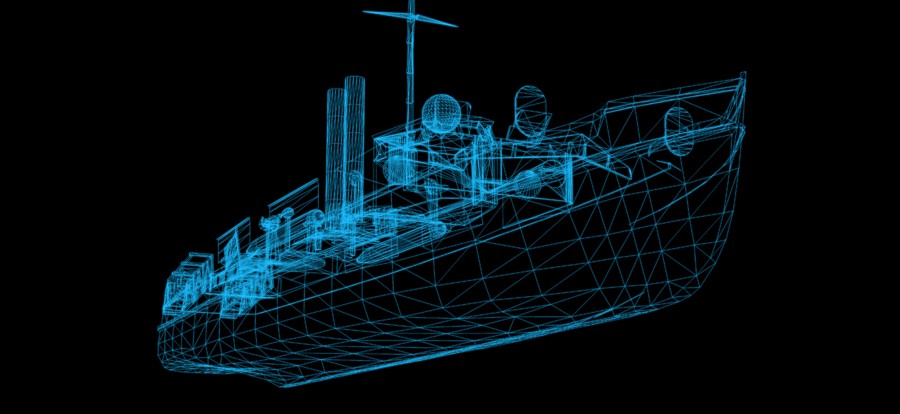
Introduction: A New Era in Naval Engineering
The maritime industry is witnessing a paradigm shift driven by cutting-edge digital technologies. Traditional naval architecture — once dominated by manual calculations and physical modeling — is now being revolutionized by artificial intelligence (AI) and advanced simulation tools. This transformation, often referred to as Naval Architecture 2.0, is redefining how ships are designed, tested, and optimized for performance, safety, and sustainability.
As shipbuilders face mounting environmental regulations and operational demands, integrating AI with simulation offers a smarter, faster, and more efficient path to innovation. Let’s explore how this powerful fusion is shaping the future of ship design.
The Evolution of Naval Architecture
Historically, naval architecture relied on empirical methods and human expertise to achieve balance between hydrodynamics, stability, and strength. While these principles remain essential, the complexity of modern vessels — from offshore platforms to autonomous ships — demands far more sophisticated tools.
The rise of computer-aided design (CAD) and computational fluid dynamics (CFD) marked the first wave of digital transformation. However, these tools often required manual tuning and extensive computational time. The next stage — Naval Architecture 2.0 — introduces AI-driven algorithms that can learn, predict, and optimize ship designs autonomously, accelerating innovation at an unprecedented scale.
AI in Ship Design: From Automation to Intelligence
Artificial intelligence is not merely automating tasks — it’s enhancing human decision-making in ways previously impossible. AI algorithms analyze massive datasets from past ship designs, sea trials, and environmental conditions to identify optimal hull forms, propulsion systems, and material configurations.
For instance, machine learning models can predict drag reduction or fuel efficiency based on design parameters, drastically cutting down the need for repetitive simulation runs. Generative design, powered by AI, can even create thousands of ship design variations in hours, selecting those that meet specific performance or environmental goals.
Moreover, AI enables predictive maintenance by monitoring structural health and predicting failures before they occur, extending vessel lifespan and improving safety.
Simulation: The Digital Twin Revolution
Simulation has always been a cornerstone of ship design, but its integration with AI has taken it to the next level. Using digital twin technology, naval architects can now create a virtual replica of a vessel — mirroring every physical and operational aspect.
These digital twins allow continuous testing under varying conditions: wave patterns, wind resistance, cargo weight distribution, and propulsion performance. AI continuously refines the simulation based on real-world feedback, creating a closed-loop system where digital and physical models evolve together.
This real-time feedback enables designers to make data-driven adjustments before a ship is even built, saving millions in prototype costs and ensuring top-tier performance from day one.
Sustainable Design Through AI and Simulation
One of the most impactful outcomes of Naval Architecture 2.0 is environmental sustainability. AI-powered simulations can model emissions, fuel consumption, and energy efficiency across various propulsion methods — such as LNG, hybrid, and hydrogen-based systems.
Through optimization algorithms, designers can minimize drag, improve hull efficiency, and select eco-friendly materials. Simulation further ensures compliance with IMO 2030 and 2050 regulations, helping shipbuilders meet stringent carbon reduction goals without compromising performance.
The combination of AI and simulation not only enhances ship efficiency but also supports the global maritime industry’s decarbonization mission.
Real-World Applications of AI and Simulation in Naval Architecture
Leading shipyards and research institutions worldwide are already embracing these technologies. For example:
- Kongsberg Gruppen uses AI-driven digital twins to simulate and optimize autonomous vessel operations.
- DNV GL employs predictive models for structural reliability assessments, reducing inspection costs.
- Hyundai Heavy Industries leverages AI algorithms to design next-generation energy-efficient tankers and cargo vessels.
These innovations demonstrate that Naval Architecture 2.0 is not a futuristic concept — it’s a present-day reality revolutionizing the maritime ecosystem.
Challenges and the Road Ahead
Despite its promise, integrating AI and simulation in ship design comes with challenges. Data availability, model validation, and high computational costs remain major concerns. Additionally, naval architects must adapt to a new skill set that combines traditional engineering expertise with AI literacy.
However, ongoing advancements in cloud computing, edge analytics, and big data management are rapidly bridging these gaps. As these technologies mature, they will enable fully autonomous, adaptive, and intelligent ship design ecosystems.
The Future of Naval Architecture 2.0
The fusion of AI and simulation is setting the stage for autonomous and self-optimizing vessels that can adapt to changing sea conditions and operational demands. In the near future, we can expect ship designs that are generated, tested, and optimized entirely in virtual environments before any physical construction begins.
This evolution will lead to shorter design cycles, reduced environmental impact, and dramatically lower operational costs — marking a new era of smart, sustainable maritime innovation.
FAQs About Naval Architecture 2.0
- What is Naval Architecture 2.0?
Naval Architecture 2.0 refers to the integration of AI, simulation, and digital twin technologies in modern ship design to improve efficiency, safety, and sustainability. - How does AI improve ship design?
AI analyzes large datasets, predicts performance outcomes, and automates design optimizations, reducing human error and design time. - What are digital twins in naval architecture?
Digital twins are virtual replicas of physical ships used for real-time simulation, testing, and predictive maintenance. - Can AI help reduce emissions in ship design?
Yes, AI-driven simulations help identify energy-efficient designs and propulsion systems that reduce carbon emissions. - What’s the biggest challenge in adopting AI in naval design?
The main challenges include data standardization, high computing costs, and the need for interdisciplinary expertise in both AI and engineering.
Final Words
Naval Architecture 2.0 marks a monumental leap forward in maritime innovation, merging artificial intelligence with simulation technologies to create a new standard in ship design. As the industry continues to evolve, this fusion will not only enhance performance and safety but also drive the transition toward greener, smarter, and more autonomous vessels.
By embracing these digital tools, shipbuilders and engineers are not just designing ships — they’re shaping the future of the oceans themselves.
